Hand-layered textures and finishes applied by artists—not just painters.

SURFACE approaches specialty finishes more like commissioned artworks than standard coatings. Ideas are developed collaboratively, whether beginning with a clear direction or exploring what could work within the space.

Working with limewash, mineral paints, textured coatings, patinas and custom decorative treatments, we develop colour, texture and material through sampling before each finish is applied by hand.

The work draws naturally on the creative backgrounds of the SURFACE team, with artists and practitioners bringing an understanding of colour, composition and material to each project. The result is a finish that feels considered, individual and connected to the space.

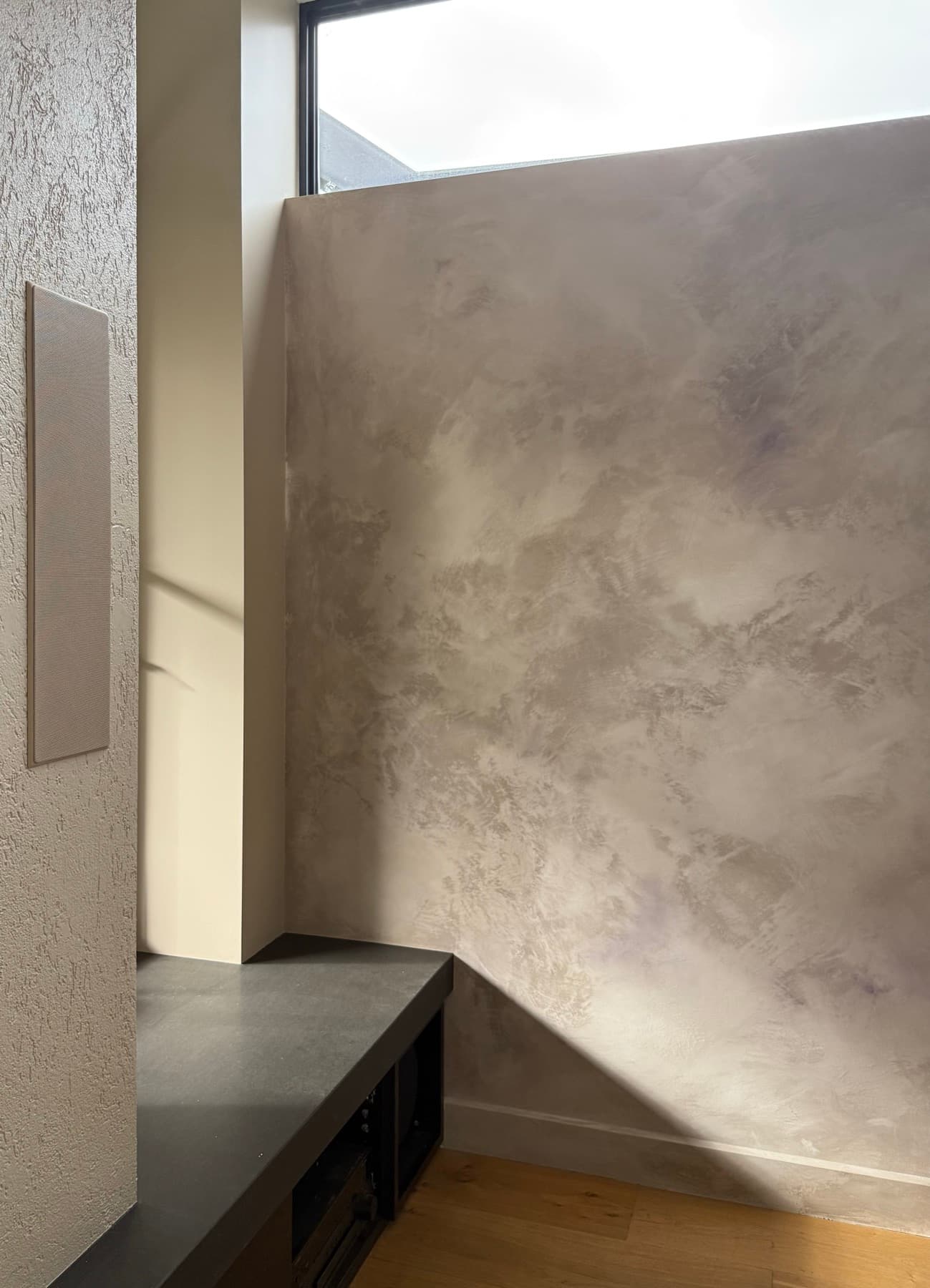
A hand-finished mineral wall in a contemporary interior

What we do

  • Breathable, mineral-based colour with a soft, chalky depth that moves with the light and ages rather than fades. Limewash bonds into masonry, render and plaster rather than sitting on top, which makes it a natural fit for older solid walls that need to breathe — and for new interiors that want the depth a flat acrylic can't give. Applied in thin brushed coats, each wall carries the mark of the hand that made it.

  • Durable mineral systems that chemically bond into masonry and render, for façades that need to breathe. Silicate coatings are UV-stable and highly vapour-permeable, which makes them the right specification for solid-wall and heritage buildings where trapped moisture would blow a conventional membrane paint off the wall.

  • Hand-worked wall finishes with grain and movement — matte, raw and quietly architectural. From fine sand finishes to heavier trowelled textures, built up in layers and worked back by hand, inside and out. Texture catches the light differently through the day, giving large walls a life that flat paint can't.

  • Reactive metal finishes — bronze, copper, iron — applied in liquid form and left to oxidise and shift over time. No two panels are the same, and the surface keeps developing after we leave. Used on feature walls, joinery, and details that want weight and age.

  • Finishes developed for a particular room rather than selected from a range. Colour, texture and application are worked out on sample boards in the space itself, under the light the wall will actually live in, and refined until the surface is right — then applied by hand.

  • Hand-painted murals and fine decorative detail — borders, ceilings, signwriting flourishes and one-off walls. We partner with muralists and decorative artists we have worked with for years, and bring in whoever suits the space. Our part is the surface: preparing the substrate, specifying the system the work sits on, and finishing the room around it so the piece belongs to the architecture.

  • Sourcing and commissioning artwork for a space. We work alongside interior stylists, curators and artists, and can make the introduction when a room calls for one. They lead on the art; we stay on the surfaces it hangs against, and handle hanging and installation once a piece is chosen.

Our process

From first sample to final surface

Specialty finishes are developed for the space, not picked from a chart. We sample, test and refine before a brush or trowel touches the wall.

01Consultation & colour

We look at the space, the light and the architecture, and talk through the finishes that suit it — guiding the design process from first colour to final surface.

02Sampling

Colours and textures are developed on sample boards and reviewed in the room's own light, then refined until the surface is right — before any commitment is made on the wall.

03Application by hand

Surfaces are prepared for the system, then the finish is built up in layers by hand — limewash brushed, plaster trowelled and burnished — each wall completed as one piece.

Get in contact

FAQ

Finish questions.

  • On masonry, render and plaster — anywhere the wall needs to breathe. It suits older solid-wall buildings, and new interiors that want more depth than a flat acrylic can give.

  • Often, but it depends on the surface — some finishes need particular base coats or a mineral substrate to bond properly. We assess what is there and prepare accordingly.

  • Yes. These finishes are mixed and applied by hand, so colour is developed for the space — we can guide the design process from first colour to final finish.

  • Yes — bespoke hand-painted work from contemporary murals to fine decorative detail, led by a practice with a background in visual art and curation.

Case studies

Finishes in practice.

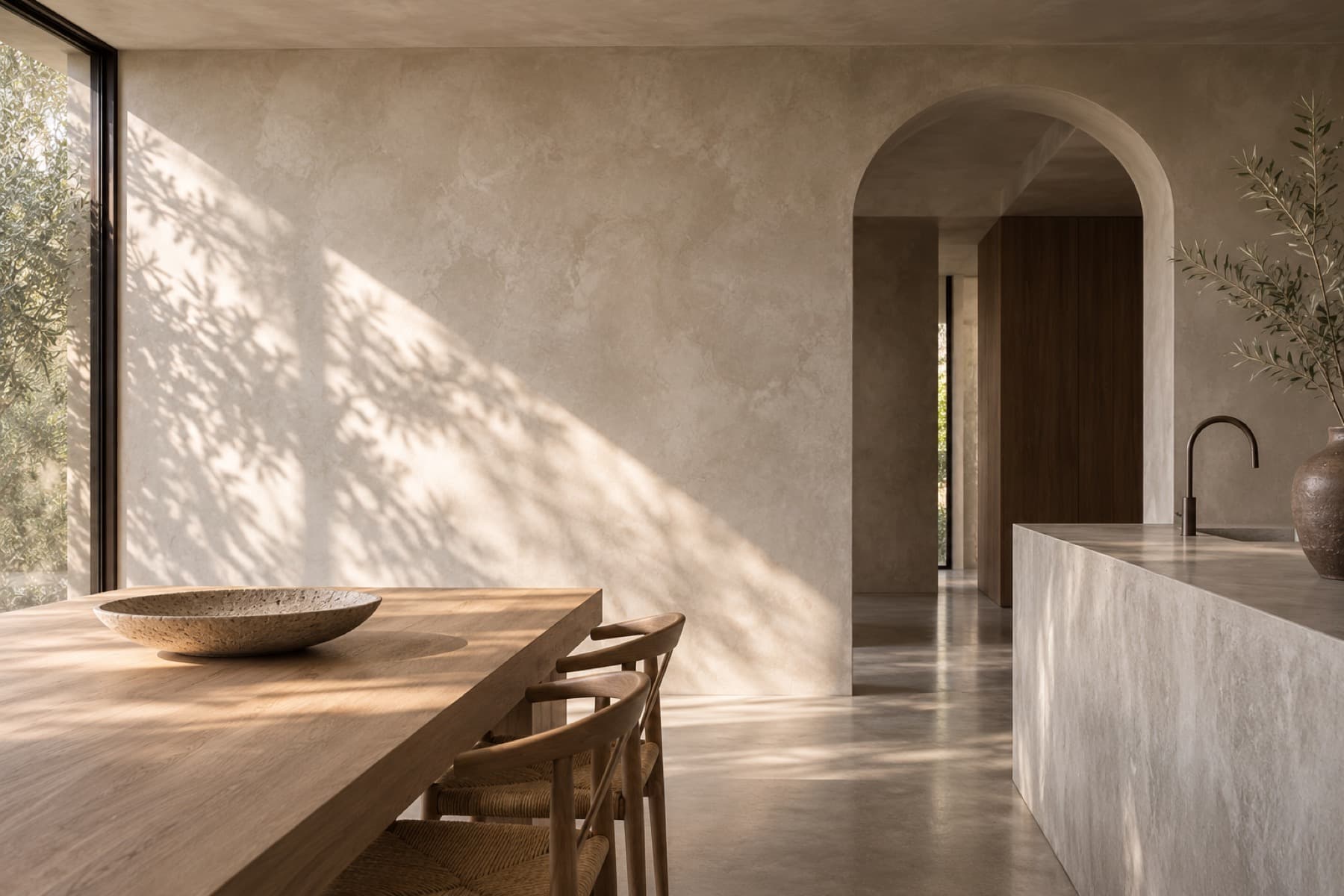
A sunlit interior with hand-finished limewash walls, a timber table and an arched doorway

Specialty surface treatments

Beyond conventional paint, a growing part of our work is in specialist finishes — breathable limewashes, textured finishes, reactive metallic patinas and mineral coatings drawn from houses like Keim, Resene and Porter's Paints. Each is chosen for the substrate, the architecture and the character a space is reaching for.

Read case study
The limewash is the first thing people ask about. The colour shifts with the light through the day — it made the whole room.
Annabel S., Brighton

Further reading

If you are weighing up a mineral finish, how limewash and mineral paints behave under changing light explains what makes them different from a conventional painted film — and why the sampling matters as much as the colour. For work closer to home, see Brighton and Bayside.

Get in touch

Start a project.

Tell us about the space and the finish you have in mind, and we'll be in touch.