Painting & specialty finishes in Brighton and Bayside
SURFACE is a sixth-generation painting and specialty finishing practice working across Brighton, Bayside and the wider bay.
Interior and exterior house painting, surface restoration and hand-applied finishes — specified for the building in front of us rather than applied to it.
Interior and exterior house painting
Walls, ceilings, trims, doors and feature rooms inside. Facades, weatherboards, eaves, windows and fences outside. The finish is only part of the work; what decides the result is what happens before a finish coat goes anywhere near the surface.
Every quote begins with walking the property, because the specification depends on what is actually there — what the previous coating is, how sound it is, how the substrate has moved, and what the surface is exposed to. That is covered in more detail on the house painting page.
What Bayside houses tend to ask for
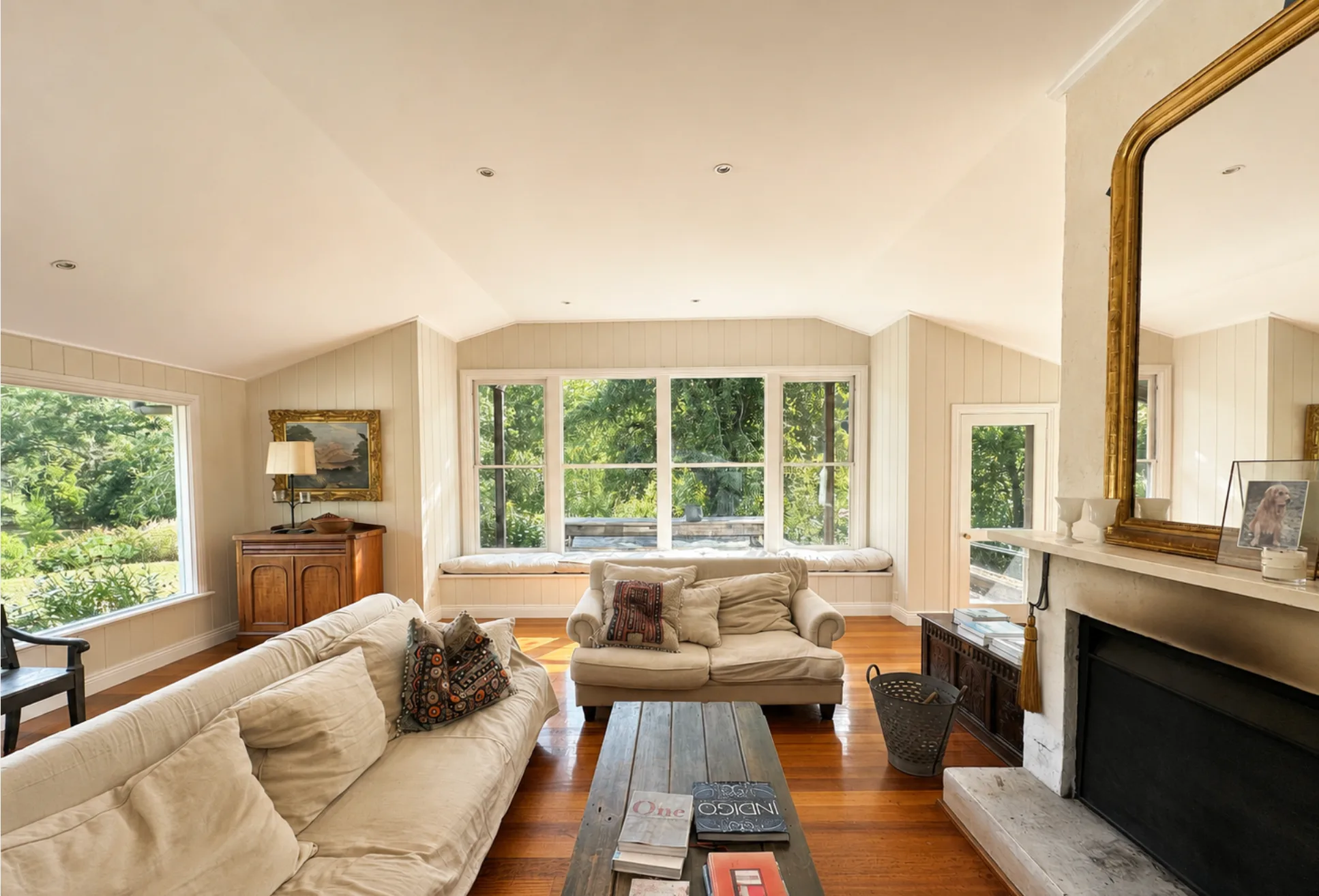
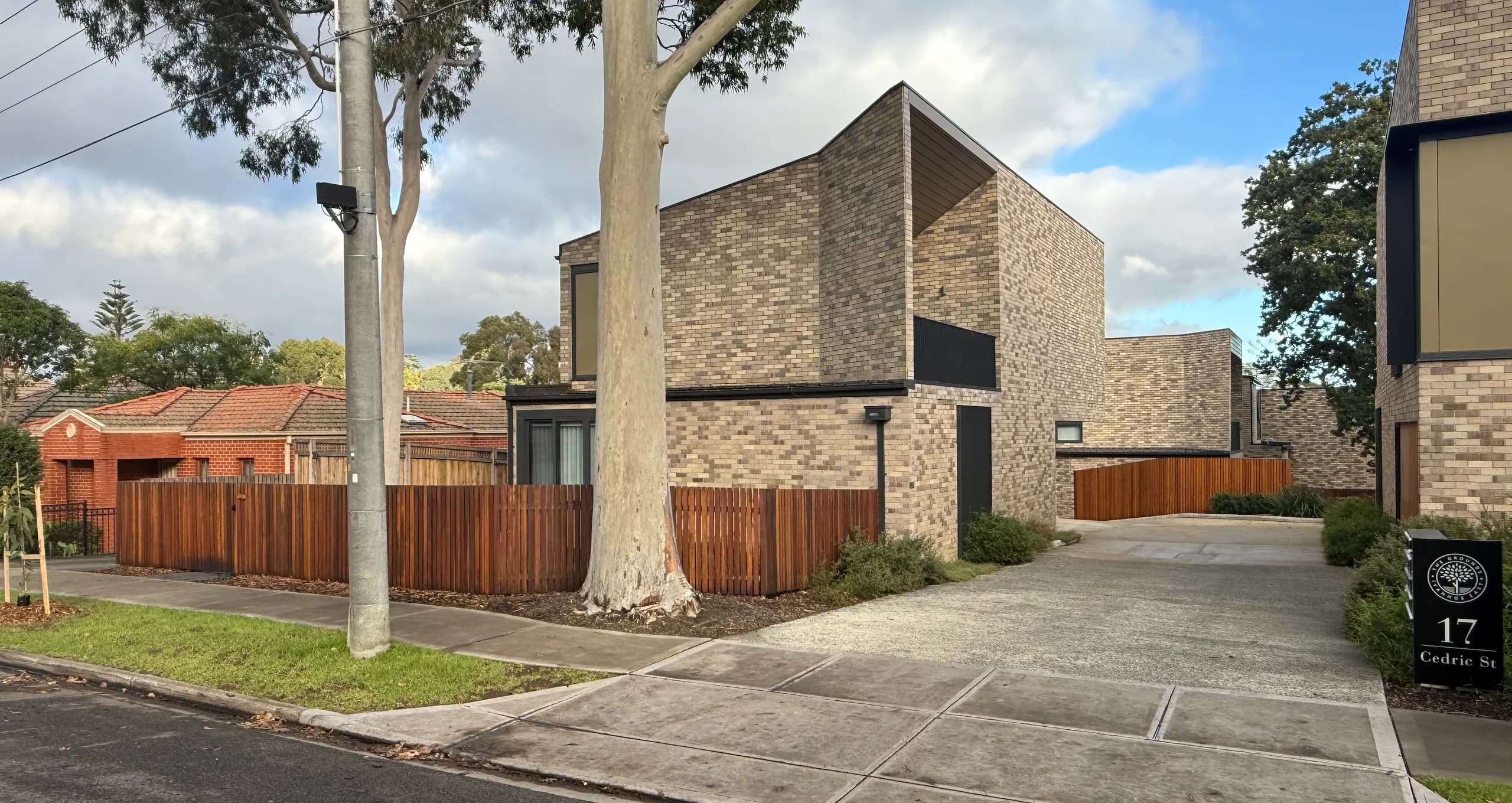
The housing across Brighton, Brighton East, Hampton, Sandringham, Black Rock and Beaumaris is mixed — painted weatherboard, solid brick, rendered masonry and a great deal of contemporary work, often on the same street and frequently on the same house.
A renovated period home is usually two buildings joined together: an original front in timber and plaster, and a newer addition in render or sheet. They are different substrates with different movement, different porosity and different histories, and they will not take the same system or age at the same rate. Getting them to read as one house is a specification problem before it is a colour one.
Exposure matters here too, though less dramatically than it is often sold. Port Phillip Bay is sheltered water, and conditions along its eastern shore are milder than the open coast. What they are is uneven — one elevation of a house can need attention years before another. We have written about why coatings near the bay wear unevenly rather than repeat it here.
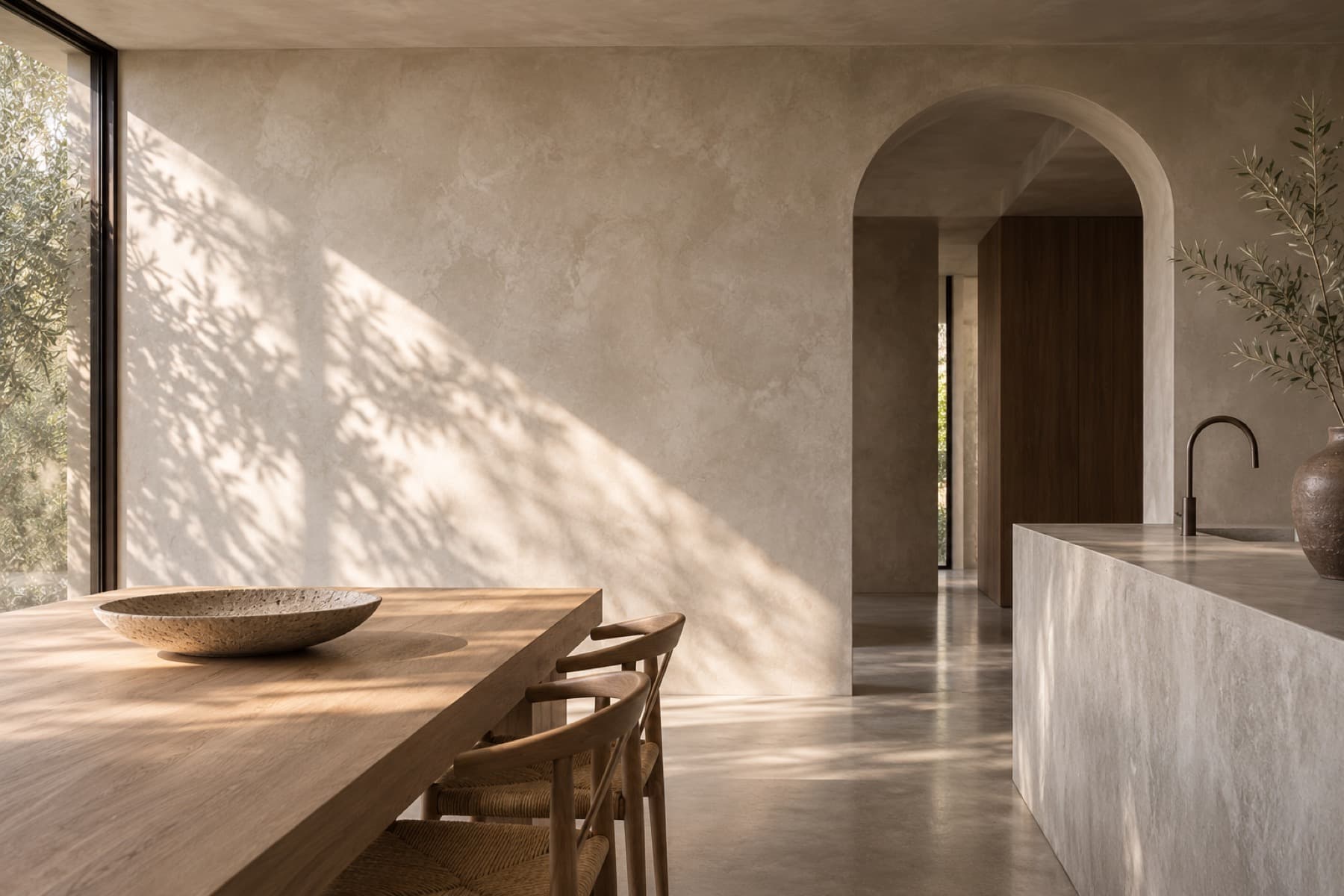
A hand-finished mineral wall in a contemporary interior.
Preparation
Paint rarely fails as paint. It fails at the joins underneath — where a coating meets the substrate, where one coating meets another, or inside a layer that had already broken down. Washing back to sound material, testing adhesion where the existing system is unknown, sealing chalked surfaces, and coating timber only when its moisture content is stable are all unglamorous and all decisive.
None of it is visible in the finished work, which is exactly why it is where corners get cut. How a coating actually lets go sets out what we look for.
Restoration and timber
Some surfaces have gone past the point where preparation and recoating will hold. Weathered timber, failed render, corroded steel detail and previous repairs that were never right need work before finishing rather than a heavier coat over the top — that becomes restoration instead of painting.
Exterior timber is the recurring one: windows, doors, sills, decks and architectural detail, where water finds end grain and joints first. Keeping ahead of that is cheaper and far less disruptive than recovering from it, which is what a planned maintenance schedule is for.
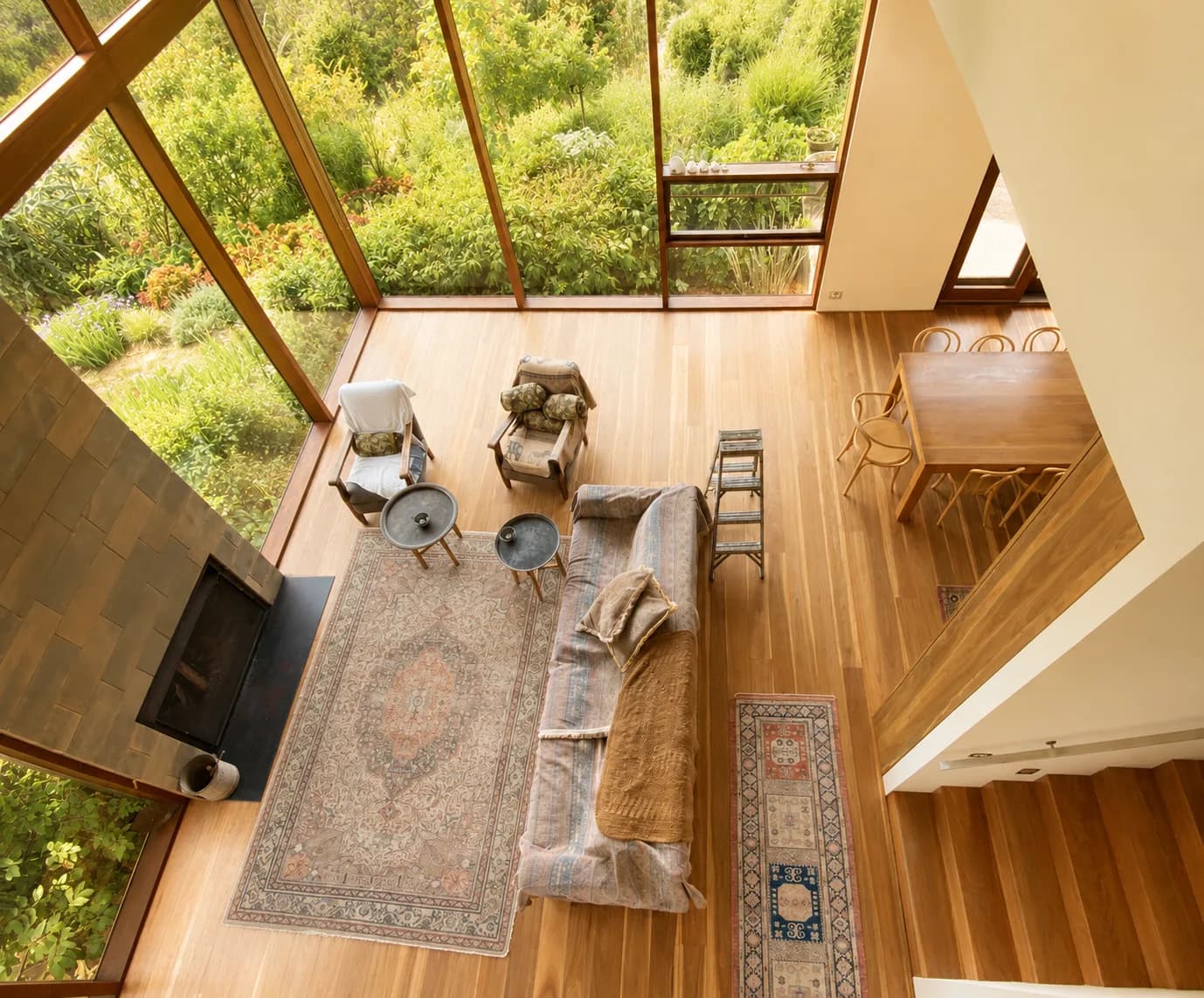
Interior painting and finishing in a contemporary timber-lined house.
Specialty finishes
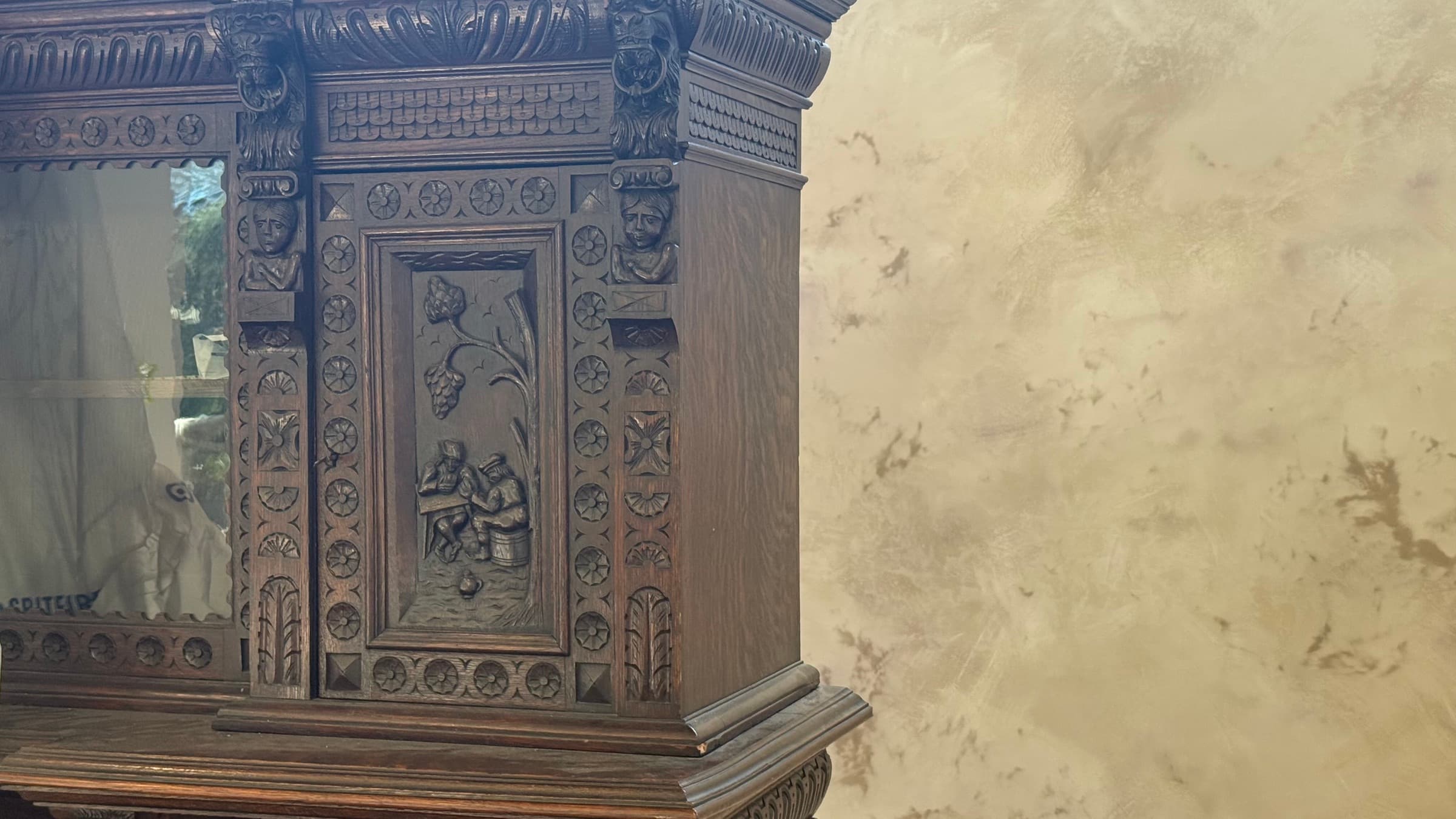
Limewash, mineral and silicate paints, textured coatings, patinas and bespoke decorative treatments, applied by hand. These are not products taken off a shelf — colour and texture are developed on sample boards, in the room, under the light the wall will actually live in, and refined before anything is committed to.
A hand-applied mineral finish, its tonal movement reading differently across the wall.
Working with architects, designers and homeowners
Where there is an architect or designer involved, finish and colour are developed against the material palette rather than chosen at the end — which usually means sampling earlier and specifying alongside the joinery, stone and timber rather than after them.
Most of our work is not architect-led, and it does not need to be. The same approach applies to a single room: look at the surface, the light and how the space is used, then specify accordingly.
Where we work
Based between Bayside and Lorne. Most of our work is across Brighton, Brighton East and the Bayside suburbs through to Beaumaris, and we travel down the coast for it.
If you are elsewhere in Melbourne, ask anyway — we take work outside Bayside where the project suits. Our painting, restoration and specialty finishes pages cover the work itself in more detail.
A planned approach to exterior timber — regular inspection, cleaning, preparation and recoating on a set schedule, so details stay protected and small issues are caught long before they become a full restoration.
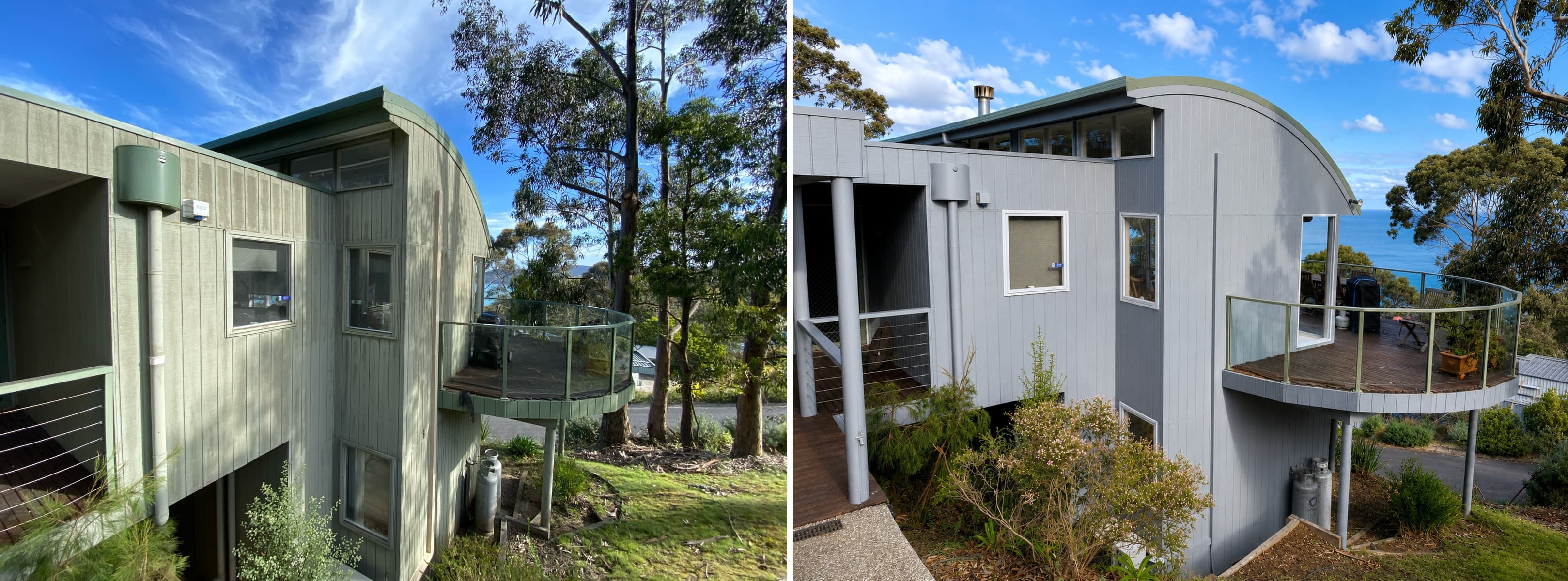
A selection of restoration and refinishing projects, shown before and after. From heritage steelwork and weathered hardwood decking to full exterior and interior transformations — each began by reading the material and its condition, then specifying the finish to bring it back and keep it protected.
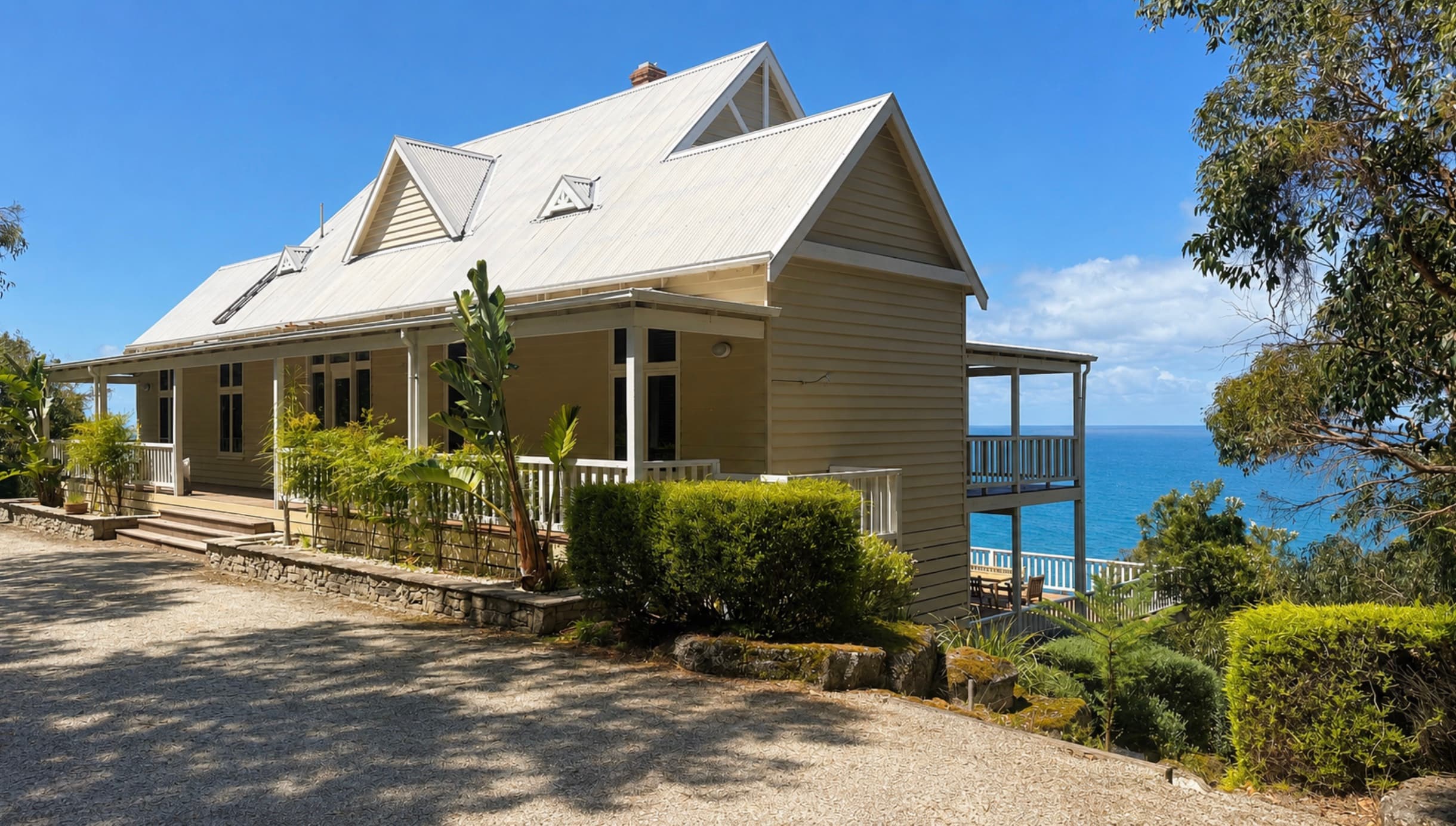
On the coast, a finish works harder than it does anywhere else. Salt, wind-driven moisture and unfiltered UV break coatings down years faster than the same system would inland — which is exactly why a planned maintenance rhythm matters more here, both for the building and for the budget.