


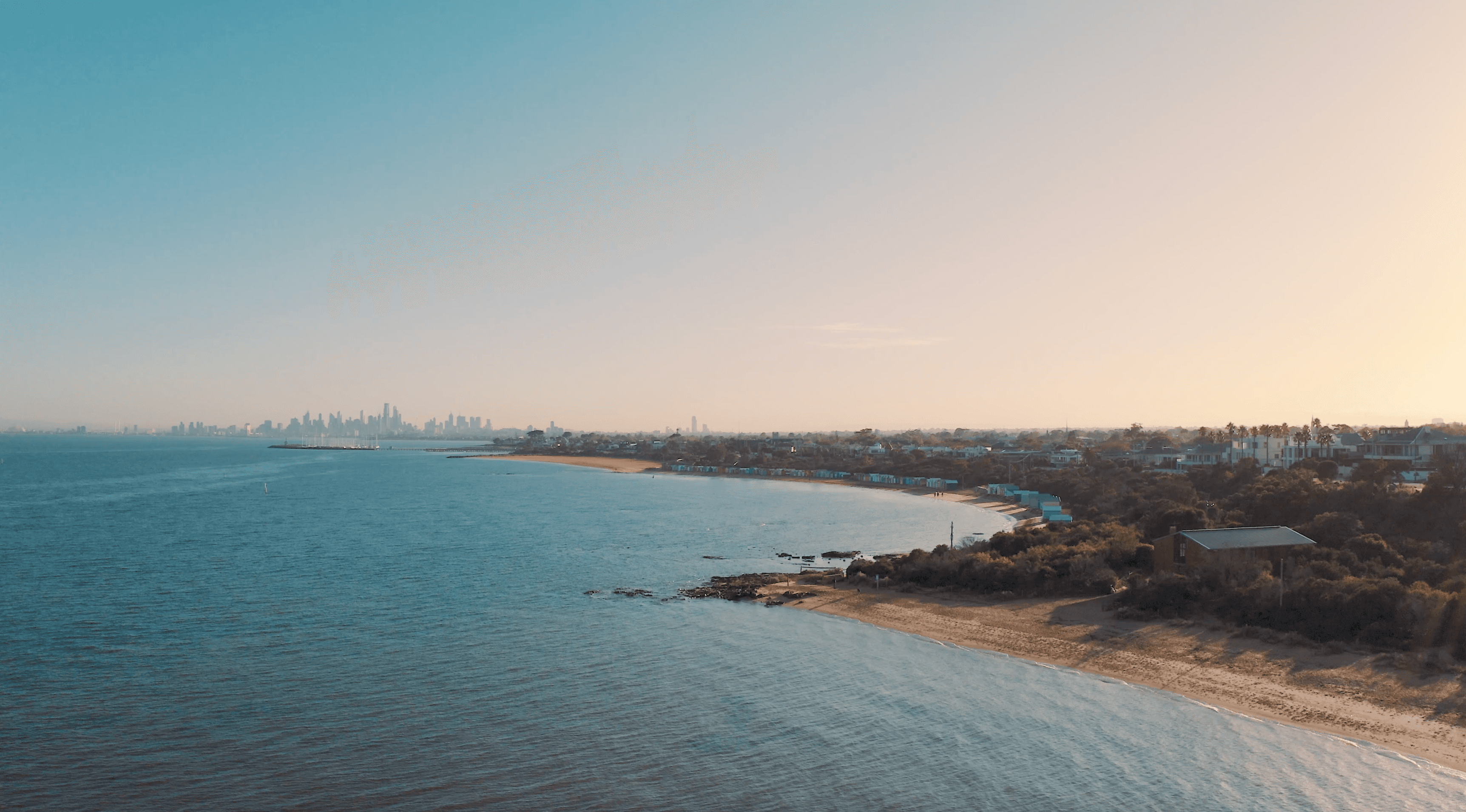
The Bayside foreshore on Port Phillip Bay — sheltered water, and a milder marine exposure than the open coast.
Exterior painting for Bayside homes: salt, UV and the life of a coating
A house near the bay doesn't weather as a house. It weathers as elevations, each on its own clock. Knowing why one wall fails years before another is most of what separates a repaint that holds from one you do again too soon.
The bay is not the ocean
Port Phillip Bay is sheltered. Exposure at Brighton or Hampton is mild next to the open coast at Lorne, where surf-driven aerosol carries much further inland. Overstating that gap is a common way to sell a heavier system than a Bayside house needs.
What's true is more useful: conditions here are asymmetric. Salt, UV and moisture don't arrive evenly on all sides, and a coating fails first where they arrive together.
Salt holds water against the surface
Salt deposits can attract and retain moisture under humid conditions. On protected exterior faces, that can extend surface wetness after rain or damp weather compared with a cleaner, freely washed surface.
Longer periods of wetting can contribute to timber movement, biological growth and moisture-related coating problems. Salt is only one part of that picture; drainage, shelter, substrate condition and the existing coating system matter as well.
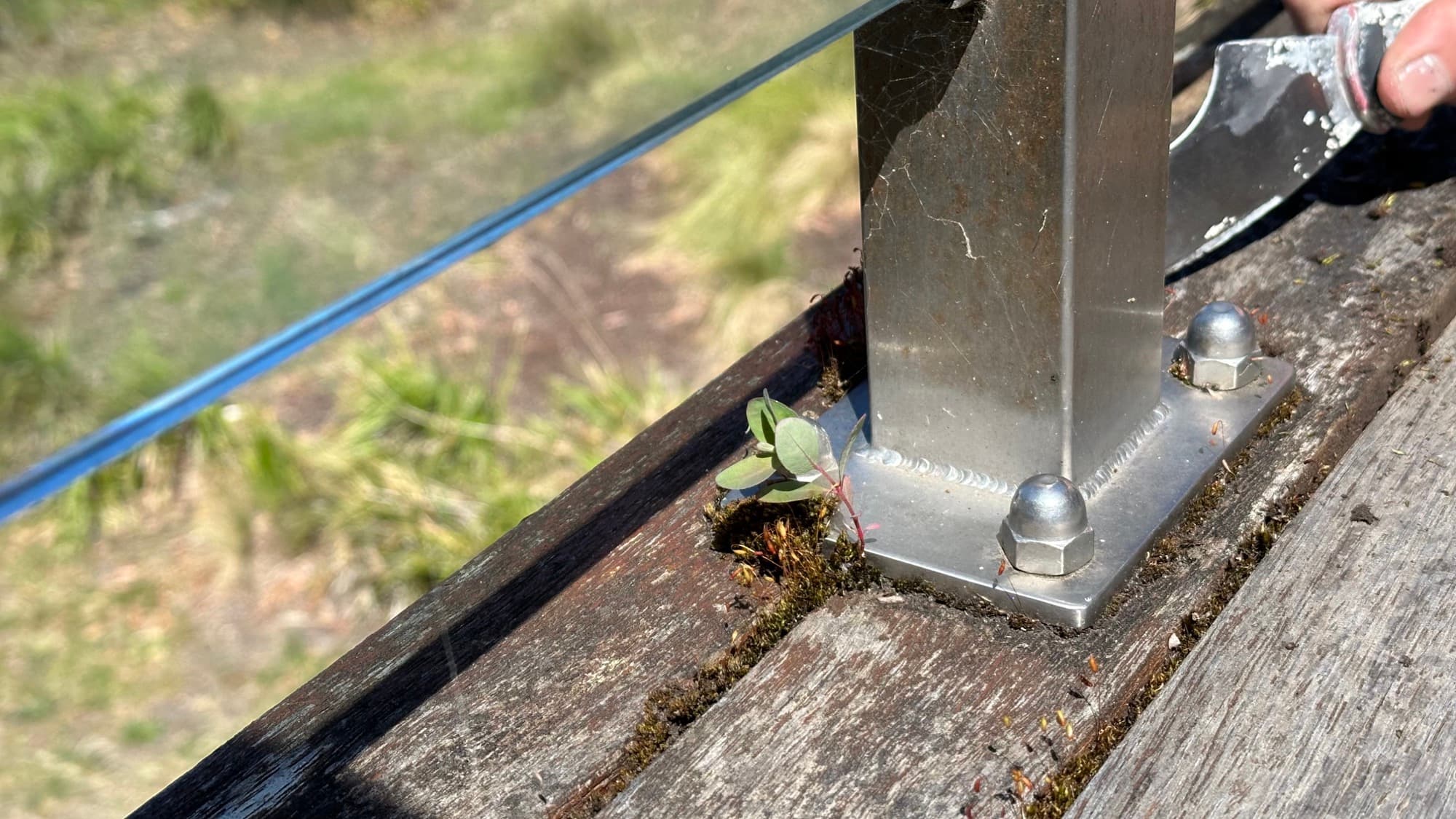
In practice, contamination can persist where rain does not regularly wash the surface - beneath sills, around rebates, behind trim and on protected faces under eaves. These are the details worth checking closely during preparation rather than judging the building only by its most exposed walls.
The elevations don't age together
North and west take the UV load. Ultraviolet breaks down the binder holding pigment in the film, and loose pigment comes off as chalk. Colour flattens, gloss drops, and the film thins from the outside in.
South-west and other exposed faces can receive a difficult combination of wind-driven moisture and afternoon sun, depending on the site's orientation and shelter. Once a coating has chalked or become porous, contamination and moisture can become harder to manage.
South and south-east stay cooler and damper. They often look sound for longer but carry biofilm. Painted over, it keeps growing under the new film.
The elevations of a house rarely age at the same rate.
That is why inspection matters more than a fixed repaint interval. One elevation may still be sound while another has reached the point where maintenance is becoming restoration.
The substrate decides how failure starts
Painted timber moves, expanding across the grain far more than along it. Failure starts at ends and edges — end grain, board joins, the base of a stile — where water gets in easily. Once it's behind the film, the coating lifts in sheets rather than wearing evenly.
Render stays alkaline for a long time after new work, and moves moisture from behind. A low-permeability coating over a wall still drying out, or one being wetted by a failed flashing or a garden bed, will blister however well it went on. The paint isn't the problem.
Masonry can carry soluble salts from inside the wall itself. Crystallising behind a coating, they push it off.
What that changes on site
If salt's effect is to hold moisture, washing is an adhesion step rather than a cosmetic one. Salt is soluble; a dry brush-down won't move it.
Chalked surfaces get washed back to sound material and, where the binder has gone far enough, sealed with a primer made for chalky substrates — coating over loose pigment means bonding a new film to powder. Timber gets coated when its moisture content is stable, not straight after a wet week.
Then specification follows exposure. A highly exposed elevation may justify a different preparation or coating specification from a sheltered face of the same house. A render wall holding moisture may need a more permeable coating rather than a tougher one — film build and breathability pull against each other, and reaching for the heaviest-duty product available is often exactly wrong.
Sheen is a real trade-off too. Higher sheen handles UV and washing better, but shows every irregularity in the surface beneath — which on hundred-year-old weatherboard is considerable.
On coastal work, the sheltered details are often in worse condition than the walls that look most exposed. The faces rain never reaches are the ones that never get washed.
This is how SURFACE approaches exterior house painting across Bayside and the Surf Coast: assessing elevations separately, and specifying preparation and coating to what each one is actually exposed to. Past the point where recoating will hold, the work becomes restoration instead — and staying ahead of that point is what a maintenance schedule is for. If you are looking at a specific house, this is the kind of assessment behind our painting and finishes work across Brighton and Bayside.